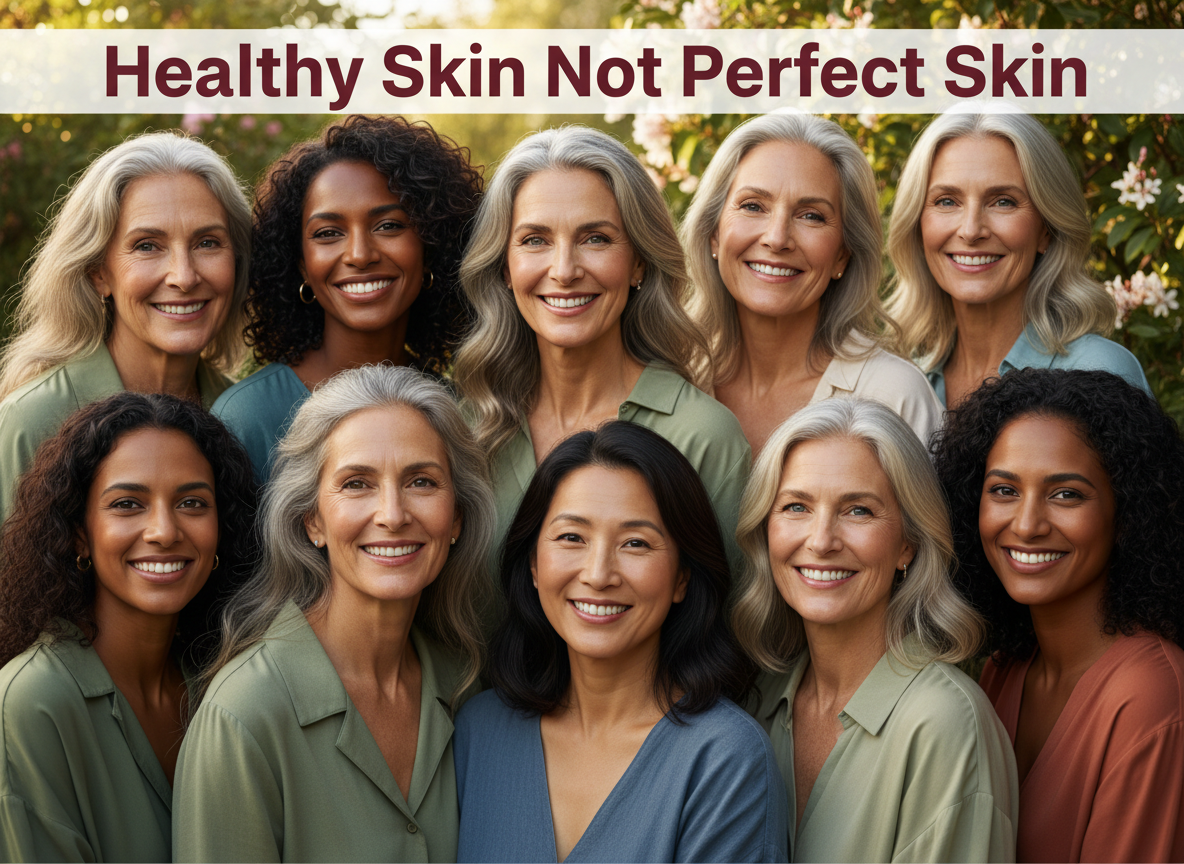
Healthy Skin Not Perfect Skin
Written By Kim Olson RYT-500+++
Sure seems like our skin joins the animal kingdom at this age, with turkey necks, elephant
knees, crows feet, alligator skin, and pug dog wrinkles. And what do we women do about this
issue? We invest around $600 a year on skincare products. Investing in your skin is one way to
maintain healthy skin. Yet, how much is too much? Today, there is a multi-billion (that is $103
BILLION) dollar beauty industry dedicated to convincing women to have perfect skin. But that is
changing as we understand it is more important to have healthy skin than perfect skin. Believe it
or not, the most popular skin product in the world used to be skin bleach. Yep, today it is
vaseline, go figure. So what happens to our skin as we age. Well, it is obvious every time you
pass a mirror to see what age is doing to your skin. We get creping, bruising, dryness, sagging
and dark spots. To add insult to wrinkling, as we age DNA damage to our cells can lead to skin
cancer. So let’s get skin into this game of aging by reviewing some anatomy.
Most of us have over 2,800 sq inches of skin and it is our heaviest organ weighing in at 20
pounds. This fascinating sensory organ contains many layers, glands, nerves and blood
vessels. What an amazing organ, able to regulate temperature, stretch, sweat, release toxins,
shed old cells and yet protect the body from environmental hazards. It can take in sun rays and
produce vitamin D with the help from the liver and kidneys. There are three main layers to our
skin: epidermis, dermis, and hypodermis. Skin’s epidermis lever is the first line of defense for
your body against pathogens. This immune system layer acts as a waterproof barrier, keeping
moisture in and bacteria, fungi, viruses, allergens and irritants out. It houses squamous cells,
basal cells, and the melanocytes that produce melanin which gives us our skin and hair color.
The epidermis layer suffers from sun damage and micro tears. No matter what ads claim, no
molecules in skin care products can penetrate this barrier.
Next is the dermis layer which really struggles as we age as this layer produces collagen and
elastin fibers. As this layer ages it adds wrinkles to our face, loses elasticity, and gives us that
jiggly backside. It also contains sweat and oil glands, follicles, blood and lymph vessels to carry
out waste. The deepest layer is the hypodermis where the fat is stored for insulation
(budunkadunk layer). It stores energy and acts as a buffer to anchor our muscles and bones.
In the minute it took you to read that paragraph, you shed 30,000 dead skin cells. Your skin is in
a constant remove-and-replace cycle. It takes between 6-8 weeks for newly formed skin cells to
make their way to the surface. So the build up of dead cells can make our complexion appear
duller and drier, this is why retinoids are popular as they accelerate that process. Another
product used is alpha hydroxy acids, (with glycolic acid).
*Like your body’s metabolism, your skin’s metabolism can also slow with age thus affecting skin
renewal, damage repair, and exposure to the environment. Finally, your skin has its own
circadian rhythm which is controlled by a nucleus (suprachiasmatic, if you want to get technical)
in the brain. During the day, skin works to shield itself from UV light, free radicals, and pollution.
At night, it repairs itself allowing the release of water (hello night sweats) and increasing
permeability. In addition, DNA repair is also accomplished by removing UV photodamage, but if
the system can’t remove those mutations, that is when skin cancer can occur. So beauty sleep
is not just a cliche’ for your skin.
Finally, your skin is home to trillions of microorganisms dedicated to fighting infection, controlling
inflammation and signaling immune responses to threats. The microbiome or skin flora is adiverse ecosystem of bacteria, fungi and viruses that work in concert to protect you. It is a
symbiotic relationship with our bodies providing wound healing, regulating the immune system,
breaking down sweat (hence B.O.) and warding off harmful pathogens. Now, that is one busy
organ wouldn’t you say? Are there any steps you can take to help this happy community living
on our skin? Of course there are or why write this article. Matter-a-fact, there are ten things you
can do to help your skin stay healthy and strong for the long haul.
1. Protect yourself from UVA and UVB rays, everyday, all day, rain or shine. Derm Assoc.
recommends “broad spectrum” SPF 30 to all exposed skin, reapplying every 2 hours.
Limit sun between 10-2, and wear dark protective clothing and a wide-brimmed hat. And
use sunglasses that block 100% of both UVA and UVB rays.
2. Gentle skin care, both strong soaps and hot water strips oils, use mild cleansers, warm
to cool water and soft cloths. Micro tears occur on our thinning skin. Blot dry your face
and body with clean towels (remember, those 30,000 dead cells are hanging on your
towels). Apply moisturizer on damp skin.
3. NEVER EVER go to bed with make-up left on your face or eyes. No matter how late you
stumble in, clean your face and apply a moisturizer for your skin type. The skin opens at
night so it is the perfect time for moisture absorption.
4. This is gonna sound so familiar. Stay hydrated to keep skin moist, eat fruits and
vegetables, as they prevent damage. Sugar, refined carbs speed up aging and milk is
linked to acne.
5. You’ve heard of wearing your emotions on your sleeve, you can actually wear them on
your face. A healthy state of mind, less stress, and “me-time” can have a dramatic effect
on your skin. Why yes, yoga helps your skin.
6. Remember that billion dollar skincare business, here with why. They recommend
products in this order: cleansing, exfoliating, toner, serum, masks, moisturizing cream,
oil, and SPF. (Your total bill would be around $500). You decide, but a gentle
fragrance-free moisturizer after bathing with a mild cleanser, and always SPF 30 works.
Did I mention always wear sunscreen?
7. It is like deja vu all over again. Get at least 7-9 hours of sleep, not only does your brain,
body and digestive track get to work, so does your skin in repairing itself.
8. Try a facial massage, gentle upward motion to stimulate circulation and collagen
production. Or spring for a facial from your local salon…you deserve it!!
9. Retinol at night for skin regeneration and hyaluronic acid serum in the morning to keep
skin hydrated. Do your research and find the best product for your skin type.
10. See a dermatologist annually. What you think is a mole could be basal cell carcinoma or
other invaders. Most skin cancer occurs in those of us 65 and older. Catching any skin
cancer early is the key to keeping ourselves wrapped in healthy, happy skin.
You know the saying, beauty may only be skin deep, but healthy skin makes for a healthy body.
Okay, I just made that up!
Summary: Wear sunscreen, practice a healthy lifestyle and see a derm.
*Disclaimer: No content in this article should ever be used as a substitute for direct medical advice from your doctor or qualified clinician. Referenced research upon request.
Thank you Kim for your thoughtful and slightly humorous blog submission.