
Welcome To The Yogi Institute Blog
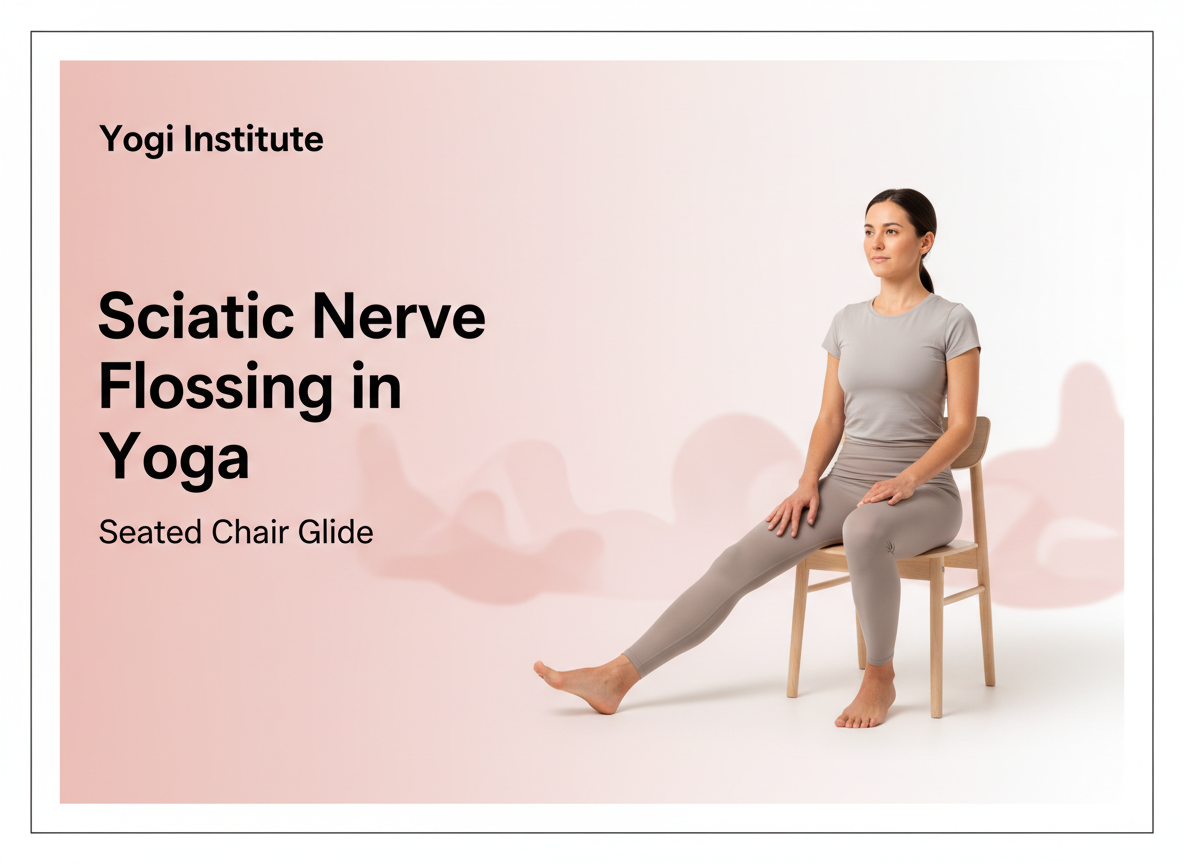
Sciatic Nerve Flossing in Yoga: A Gentle, Anatomy-First Guide (No Medical Claims)
If you’ve ever felt a sharp, zingy, or pulling sensation that seems to travel from your low back or glute down the back of your leg, you’re not alone. A lot of yogis call this “sciatica,” and the instinct is usually to stretch harder—especially the hamstrings. But sometimes what you’re feeling isn’t a tight muscle at all. It’s your nervous system asking for a different kind of support.
In this post, I’m sharing a gentle, anatomy-first approach to sciatic-like symptoms that blends movement science with the inward practice of listening. You’ll learn what “nerve flossing” (also called nerve glides) actually means, why regulating your nervous system matters before you mobilize anything, and a few yoga-friendly options—like a simple seated chair glide—that can help you explore ease without forcing range. No medical claims, no diagnosing—just grounded education and compassionate tools you can try.

Why Alignment in Yoga Matters (and Why It Looks Different in Every Body)
Alignment isn’t about achieving a “perfect” yoga shape—it’s about creating a relationship between your bones, joints, muscles, breath, and attention that supports yourbody. When we practice with intelligent alignment, we build safety and stability, strengthen the right systems, and give the nervous system a clear message: you’re supported here. And from that support, something deeper becomes possible—steadier breath, clearer focus, and a more honest connection to what’s happening inside.
Just as importantly, alignment is never one-size-fits-all. Bone length, joint structure, muscle activation patterns, balance, and injury history all shape how a posture should be expressed. Seeking individualized alignment invites us to turn inward instead of comparing outwardly. With curiosity and compassion, we stop chasing someone else’s form and start listening for our own—moment by moment, breath by breath.
Self-Care for Yoga Teachers: A Sustainable Daily Routine That Prevents Burnout
Teaching yoga can look serene from the outside, but many of us know the behind-the-scenes reality: late-night messages, emotional labor, content creation, and holding space for others even when our own bodies are asking for rest. Over the years, I’ve learned that self-care isn’t a “nice-to-have” for yoga teachers—it’s part of our responsibility. When we regulate our nervous system, protect our energy, and build small restorative rituals into the day, we don’t just avoid burnout—we teach with more presence, clarity, and heart. This post shares a sustainable daily self-care routine (plus a few teacher-specific practices) to help you stay grounded, resilient, and truly nourished—on and off the mat.

Finding Joy After Heartbreak: How Yoga Can Help You Heal and Thrive
Discover how yoga can help you find joy and peace after heartbreak. Learn practical tips, read Jill’s personal story, and try our “Gentle Heart-Opening Flow” class from Yogi Institute’s on-demand library.

A Heartfelt Letter to Yoga Teachers: 5 Authentic Ways to Stay Inspired & Serve Your Community
Feeling overwhelmed as a yoga teacher? Read this supportive letter from Jill Enticknap, lead trainer at Yogi Institute, offering inspiration and 5 actionable strategies to help yoga instructors stay authentic, organized, and connected while planning classes and events. Your work matters now more than ever!

The Realities of Teaching Yoga: Vulnerability, Burnout, and the Beauty of the Practice
Discover the real challenges yoga teachers face—income, burnout, imposter syndrome—and the inspiring rewards of teaching yoga as a full-time career.