
Welcome To The Yogi Institute Blog
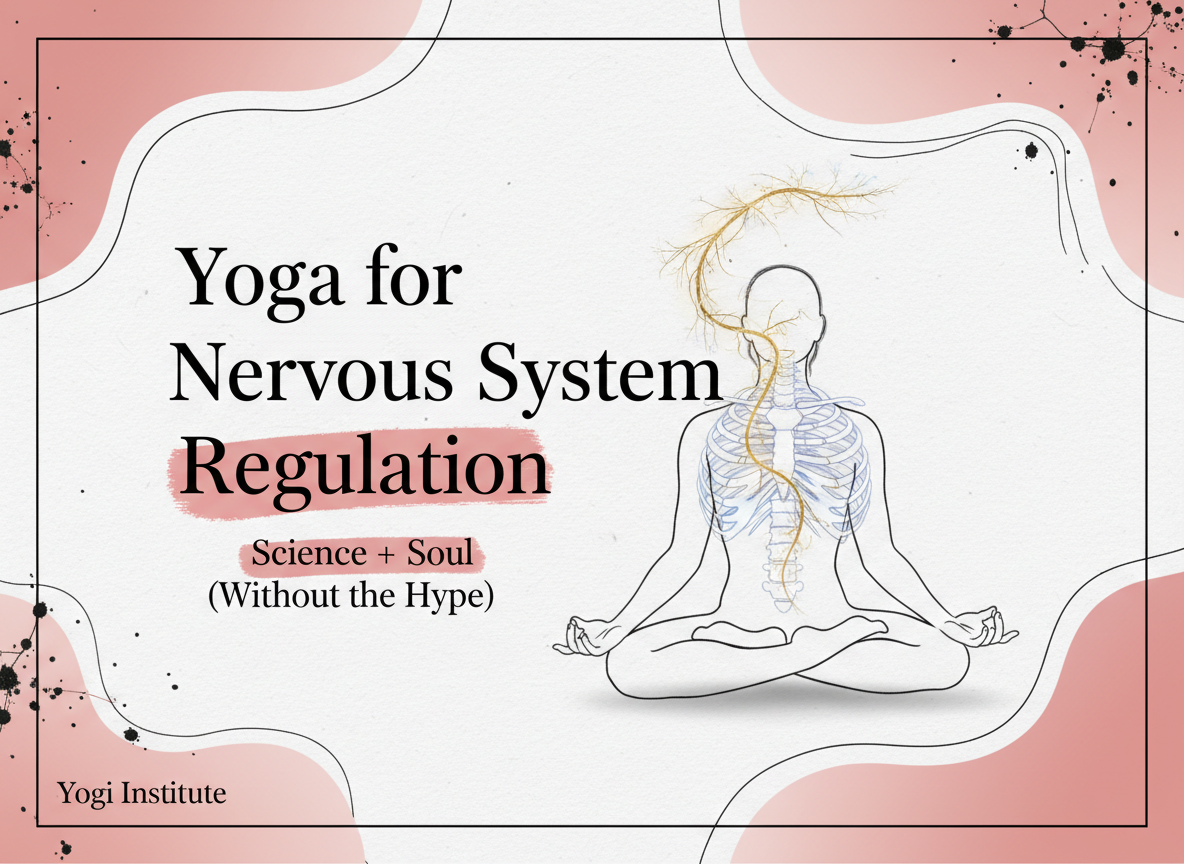
Yoga for Nervous System Regulation: Science + Soul (Without the Hype)
Your nervous system is trainable: when you pair anatomy-smart movement with steady breath and mindful attention, you’re not just “relaxing”—you’re practicing a repeatable skill for resilience. Learn anatomy-forward, breath-led yoga practices that support nervous system regulation—plus a simple sequence to build calm and self-trust.
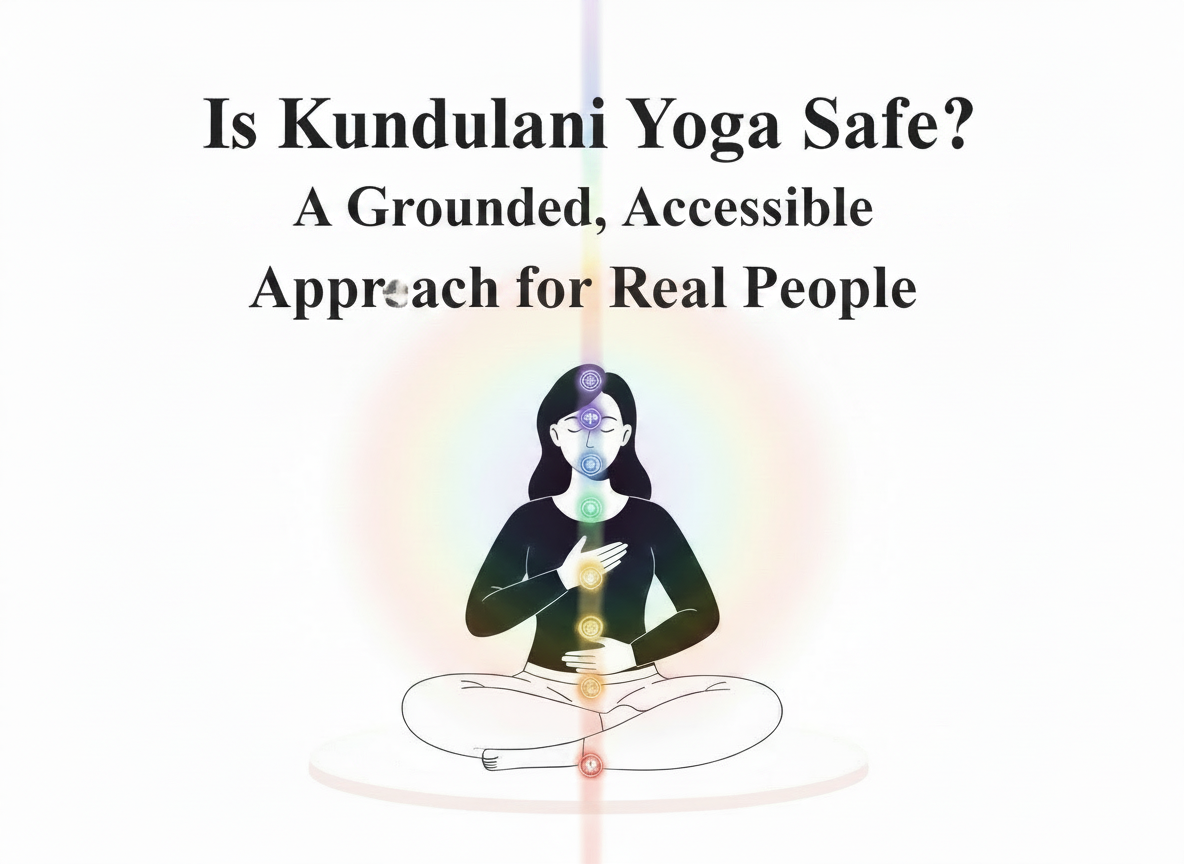
Is Kundalini Yoga Safe? A Grounded, Accessible Approach for Real People
Kundalini Yoga gets labeled as “powerful” for a reason—but powerful doesn’t have to mean intense, scary, or inaccessible. If you’ve been curious and also a little cautious (because of what you’ve heard online), you’re not alone. The truth is: safety in Kundalini isn’t about avoiding the practice—it’s about howit’s taught and how you pace it.
In this post, we’ll explore what Kundalini Yoga actually is, what people mean when they talk about “awakening,” and the green flags to look for in a grounded, beginner-friendly class. You’ll also get a simple, calming practice to help you experience Kundalini in a way that supports your nervous system—without forcing breath, emotion, or energy.
Hip Tightness and the Nervous System: How to Find Ease Without Forcing Range
When your hips feel tight, it’s tempting to assume you just need to stretch more. But often, “tightness” isn’t a flexibility problem—it’s a protection pattern. Your nervous system may be increasing muscle tone to create stability, especially when stress is high, breath is shallow, or your body doesn’t feel fully supported.
In this post, we’ll explore the anatomy around the hip joint, the difference between mobility and stability, and why forcing range can backfire. You’ll also get a gentle, yoga-informed reset you can try to invite ease—without pushing, pulling, or overriding what your body is trying to say.
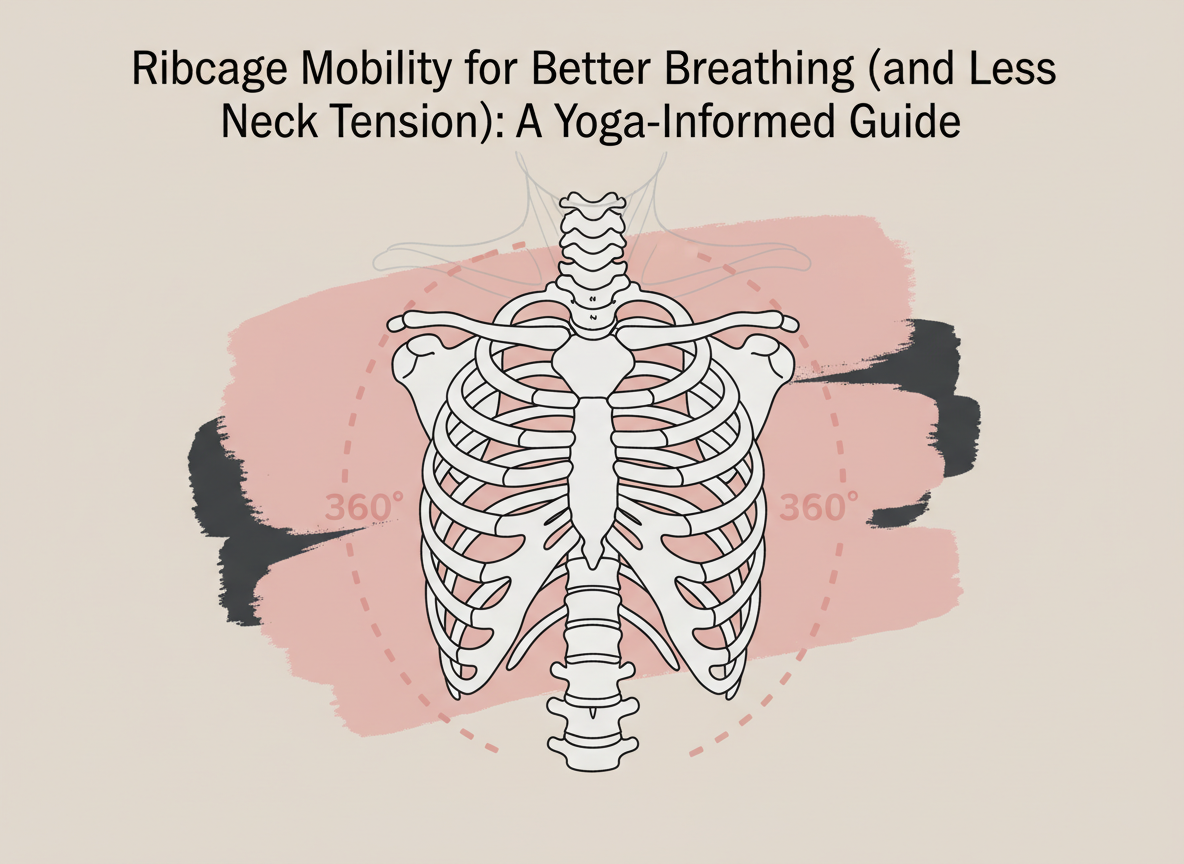
Ribcage Mobility for Better Breathing (and Less Neck Tension): A Yoga-Informed Guide
Your ribcage isn’t a rigid cage—it’s a living, moving structure designed to expand, rotate, and soften with every breath. When that movement gets restricted (hello, desk posture, stress, shallow breathing, tight upper back), your body still has to breathe… so it borrows motion from somewhere else. Often, that “somewhere else” is your neck and shoulders—leading to that familiar tight, overworked feeling at the base of the neck.
Ribcage mobility is one of the most underrated keys to better breathing. When your ribs can move in all directions—front, sides, and back—your diaphragm can do its job more efficiently, your breath feels fuller without effort, and your nervous system gets the message that you’re safe. In this yoga-informed guide, you’ll learn simple ways to restore 360° breath capacity through gentle, targeted movement—so you can breathe deeper, move easier, and let your neck finally stop doing the work your ribcage was meant to do.
From Fight-or-Flight to Flow: A Vagus Nerve–Supportive Yoga Practice
When stress feels stuck in your body, it’s easy to think you need to “calm down” harder. But what if the real practice is learning how to signal safety—gently, consistently, and without forcing anything? In this post, we’ll explore the vagus nerve (your body’s calm pathway), how breath and simple yoga shapes may support nervous system balance, and a few grounding practices you can use anytime you want to come back to center—one exhale at a time.